
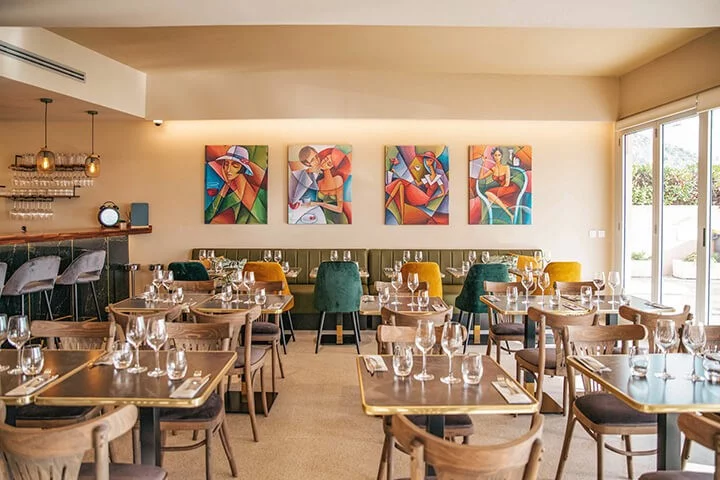
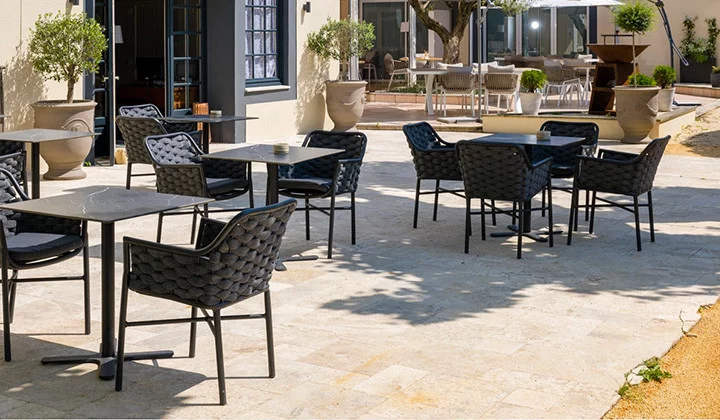
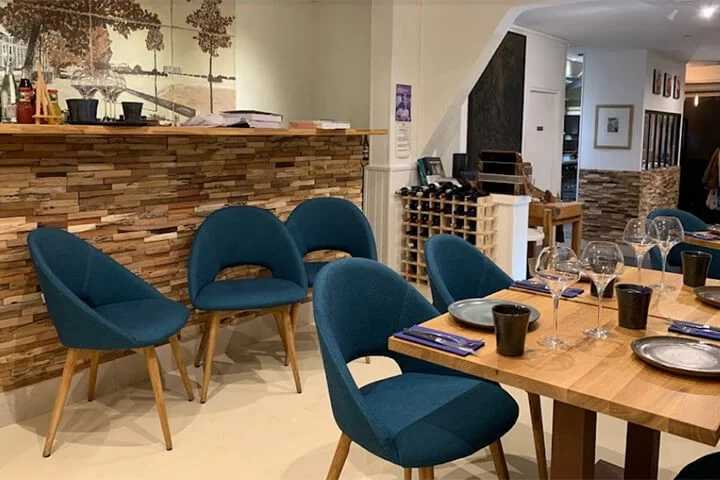






The terrace is no longer a secondary space: it represents a real lever of attractiveness, profitability and loyalty. Whether in fine weather or mid-season, it becomes your establishment's prime showcase. A well-thought-out layout makes the difference between an empty terrace... and full service.
Whether you're a restaurant owner, hotelier or beach operator, this guide will help you transform your outdoor space into a strategic asset, thanks to durable professional furniture designed to appeal to your customers and make your teams' work easier.
Why a well-designed restaurant terrace is strategic
The terrace is an integral part of the customer experience. Properly laid out, it enhances the value of every square meter, reinforces the visual appeal of the dining establishment, and facilitates the work of the teams. It also acts as a sales lever, while asserting the identity of the venue to a clientele increasingly attentive to ambience and comfort.
A well-designed terrace attracts targeted customers
A true visual signal, the terrace attracts at first glance. Exterior decoration, designer furniture, harmonious colors and discreet solar lighting create a legible and engaging atmosphere. In an urban restaurant, a neighborhood café or a hotel with a garden, the design reflects the interior concept and is immediately appealing.
A well-proportioned terrace table, combined with comfortable chairs, colorful cushions or modular poufs, creates a relaxing atmosphere. The choice of furniture - format, shape, finish, price - defines the perceived universe: top-of-the-range furniture, convivial atmosphere, natural inspiration. Elements such as an awning, a bioclimatic pergola or a professional parasol provide shade, visual protection and thermal comfort for a prolonged customer experience.
Anticipate legal constraints on installation
The layout of your terrace must comply with the local legal framework. For public spaces, a temporary occupancy permit (AOT) issued by the town hall is essential. This permit defines authorized dimensions, passage zones, installation periods (often from spring to autumn) and the types of elements accepted: foldable furniture, shade sails, removable shelters, etc.
ERP (Établissements Recevant du Public) standards also apply. They require smooth circulation, accessible access, and sometimes precise rules on the type of furniture (e.g.: modular, lightweight furniture that complies with outdoor use standards). The City of Paris, for example, regulates authorized colors, the shape of canvases, the addition of plants and the presence of outdoor lighting.
Richard Diffusion's expert advice
Before you buy your furniture, take into account the specific features of your municipality. Our expert team will support you in this regulatory validation phase, with a selection of professional CHR furniture that complies with AOT and ERP requirements: sturdy, modular, customizable - designed to last and enhance your restaurant's terrace.
CONTACT US hereFurniture for a successful terrace ?
Professional furniture is a cornerstone of any successful outdoor furnishing project. It must meet the requirements of the hospitality sector: sturdiness, ease of maintenance, adaptability and resistance to intensive use. But it must also reflect the style and ambience you want to create on your terrace.
Depending on the type of establishment, the surface area available and the level of personalization required, several options are available: modular furniture, folding furniture, comfortable seating, or even high-end furniture to enhance the image of the location. Properly chosen, furniture optimizes space, ensures smooth service and guarantees a consistent customer experience, while complying with exterior design standards.
Tables, chairs and benches: outdoor furnishing essentials
Each piece of professional furniture meets precise criteria: resistance, comfort, stability. On a restaurant terrace, the layout is designed according to use, space and customer flow.
- The tables can be adapted to suit any layout. A stable base, consistent size and easy-to-clean surface facilitate daily use. Folding or collapsible models are ideal for modular terraces or temporary sites.
- Terrace chairs combine lightness, ergonomics and sturdiness. The seat, armrests and height can be adjusted according to the level of comfort required. In relaxation areas, a low armchair or modular furniture can be integrated without obstructing traffic.
- Bench seating extends walls or structures lounge areas. Weather-resistant seating, compatible with custom-made outdoor cushions, optimizes surface area and increases seating capacity.
- The base, an often overlooked element, ensures stability on uneven floors. It also ensures customer safety and smooth service.
Materials to choose: between aesthetics and durability
Outdoors, CHR furniture is subject to major constraints: climatic variations, frequent cleaning, intensive use. The choice of materials therefore determines longevity, appearance and perceived comfort.
- Braided resin and synthetic braiding are ideal for lounge areas. Their visual texture and moisture resistance make them reliable allies for sheltered or partially covered areas.
- Aluminum combines lightness, strength and insensitivity to corrosion. It blends in well with urban terraces or any folding or stackable furniture. Powder-coated steel is denser, ensuring perfect support even in windy conditions.
- Treated wood remains a popular solution for creating a natural ambience in a garden- or seaside-style catering establishment. Its warm appearance is very appealing, provided it is combined with a resistant structure.
Some models feature technical finishes: anti-UV, water-repellent, epoxy paint. These treatments extend the life of top-of-the-range products while facilitating daily maintenance.
Essential accessories for a comfortable terrace
Accessories transform a standard terrace into a truly comfortable space. Some elements enhance customer well-being, while others optimize the layout or reinforce the visual coherence of the space.
To ensure effective sun protection, shade sails, removable shelters and pergolas structure the space and create welcoming areas. Outdoor heating, solar lamps and ambient lighting extend the use of the terrace all year round.
When it comes to comfort, outdoor cushions, poufs, plaids and the mosquito box offer a concrete solution for improving the customer experience, especially in garden or semi-open areas.
Finally, planters, screens and plant dividers provide privacy without blocking traffic. These elements, which are easy to integrate, contribute to the restaurant's brand image and increase the amount of time spent at table, with a direct impact on profitability.
Create an unforgettable customer experience with a well-appointed terrace
A well-designed terrace does more than simply install furniture: it shapes the experience. Every detail influences the customer's experience: fluid layout, natural circulation, choice of seating, visual coherence... everything contributes to reinforcing the identity of the place and the quality of the welcome.
Furniture: a lever for comfort and memorability
A well-designed armchair, a stable chair, a table adapted to the surface, or a bench seat the modular design contributes to creating a pleasant environment, both functional for service and engaging for the customer. Each piece of CHR furniture becomes a vector of emotion, contributing to both the first impression and the desire to return.
On a café terrace, a garden lounge or a restaurant in the city, furniture sets the mood. The combination of colors, the integration with the interior design, woven resin or the play of levels create a unique atmosphere, often mentioned in customer reviews. A well-thought-out layout builds customer loyalty, attracts new visitors and enhances the terrace as a commercial asset in its own right.

Discover our outdoor products
Chairs, Armchairs, Stools, Trays, Table bases, Umbrellas... Our productsHow to optimize the layout of your restaurant terrace ?
A good outdoor layout depends as much on the positioning of the furniture as on respecting traffic constraints. The size of the terrace, traffic areas and seasonal traffic all influence how the space is occupied. Every square metre counts: the aim is to reconcile service efficiency, customer comfort and coherence with the concept of the establishment.
The art of arranging furniture to suit customer flow
A fluid layout makes it easier to welcome customers and reduces friction points. A folding table that's too wide, a chair that's the wrong way round, or a layout that's too dense can all impede circulation and complicate service.
Installation must comply with the regulatory framework (ERP, public space, local constraints). The use of modular, stackable or easy-to-move furniture facilitates adaptation to the season, events or temporary occupation of the public domain. A professional layout improves team rhythm and enhances the terrace as an efficient service area.
Create different zones to maximize the customer experience
Segmenting the terrace by type of use offers an enriched experience. A relaxation area equipped with synthetic woven furniture, a dining area with modern furniture, and a cosy waiting area form a clear path for customers.
This zoning enhances the perception of space, makes small surfaces more attractive and optimizes comfort without hindering circulation. Well thought-out, it enhances the perceived value of the space, improves reception and boosts customer loyalty.
What are the new trends for restaurant terraces?
Professional terraces are evolving towards sustainable, sober and flexible layouts. In 2025, the emphasis is on resistant materials, modular furniture and shapes that combine comfort, aesthetics and ease of maintenance. The aim remains unchanged: to attract attention at first glance, streamline service and enhance the customer experience.
Fashionable materials and shapes
FSC®-certified teak is the benchmark for establishments seeking to reconcile natural aesthetics with longevity. Lightweight, stable powder-coated steel is ideal for urban terraces where design must be combined with practicality. Synthetic weave, braided rope and stone-effect trays add relief while remaining easy to clean.
The lines are purer: lighter structures, low seats and minimalist shapes dominate the new collections. These choices create an open environment, conducive to circulation and the enhancement of outdoor space.
Personalization as a lever of attractiveness
Personalized furniture is becoming a marker of identity. Restaurateurs create their ambience from organic hues (ecru, sand, olive green) or opt for brighter accents (electric blue, burnt orange) to stand out from the crowd.
The evolutionary layout is based on stackable, foldable or adjustable elements, designed to adapt to the needs of the season, the service or the venue. Well thought-out furnishings help to manage flows, stage spaces and improve operational efficiency. The result: a coherent customer experience, enhanced from the moment you step onto the terrace.
Take action for a terrace that makes a difference
Successful furnishings are not based on furniture alone, but on a coherent approach, designed to meet the constraints of the site, reinforce the image of the location and offer real added value to each customer.
At Richard Diffusion, we design made-to-measure solutions that are readily available and adapted to the requirements of hospitality professionals. Our expert team, based in France, will work with you from selection to installation, transforming your terrace into a real sales lever.
Discover our selection of professional furniture and create a terrace to match your ambitions.